A quiet truth we rarely admit out loud
There comes a moment in life—maybe late one evening while opening a holiday bin full of ornaments you don’t even like anymore… or while dusting a shelf and staring at the same unattractive knick-knack you never liked from the start.
And suddenly you whisper to yourself:
I don’t like this.
I never did.
So why is it still in my home… or in my life?
This blog isn’t just about clutter.
It’s about the emotional weight of the things we keep:
- The traditions we upheld long after they stopped feeling meaningful
- The social obligations we inherited without being asked
- The expectations we carried from a different chapter of life
If this is you, you’re not alone.
Across the country, Baby Boomers and Gen X women are quietly waking up to the same realization:
We spent decades living by default. Now? We want to live by choice.
Why we keep things out of habit, history, and guilt
You didn’t necessarily keep that item because you loved it.
You kept it because:
- Someone gave it to you
- It once symbolized something meaningful
- You felt bad letting it go
- You forgot to question its place in your life now
- It blended into the background and became invisible
This is what happens when objects outstay their purpose:
We assume they belong.
We stop noticing when they don’t.
This isn’t about being messy.
It’s about being emotionally loyal to things we no longer even like.
Why Boomers and Gen X keep physical items they don’t love
Many of us were raised with powerful messages:
- Don’t waste
- Take care of what you have
- Gifts must be cherished
- Sentimental things are important
- Someone worked hard to give this to you
Beautiful messages… but easily interpreted in ways that created emotional clutter.
We kept things out of respect.
Out of guilt.
Out of fear of disappointing someone.
And somewhere along the way, the item became symbolic—long after the joy disappeared.
How to let go with clarity and compassion
Here’s the shift:
Stop asking, “Can I justify getting rid of this?”
Start asking, “Does this support the life I want now?”
A few gentle ways to release:
- Honor the intention, not the object.
The love stays, even if the thing doesn’t. - Give it a new purpose.
Donate it, pass it along, recycle it. - Let usefulness outweigh guilt.
Someone else may love what you never did. - Remove the unspoken rule that gifts must be kept.
A gift fulfills its purpose the moment it brings joy to the giver.
Letting go isn’t rejecting the past.
It’s choosing the present.
Traditions we’ve outgrown—but feel obligated to keep
Some traditions age beautifully.
Others cling like silver tinsel in January.
Maybe it’s:
- The holiday meal you host even though you’re exhausted
- The ornament exchange no one enjoys (we do NOT need more ornaments!)
- The “fun” game night that feels like a chore
- The yearly family photo where no one smiles
- The recipe you make out of duty, not love
Traditions are only sacred if they still fit who you are now.
A solution: evolve your traditions with intention
You don’t have to throw a tradition away.
You can reshape it.
Ask:
- What was the original purpose of this tradition?
- Does it still serve us?
- What would make it meaningful now?
Sometimes the answer is simple:
- Simplify it — smaller dinner, less prep
- Shorten it — hors d’oeuvres instead of a full meal
- Rotate responsibilities — let someone else host
- Turn tasks into experiences — bake cookies with grandchildren
- Create something new — a family walk after dinner
Tradition should feel like connection… not obligation.
Social obligations we continue out of habit
There’s a strange loyalty to routines:
- The annual neighborhood gathering where no one knows each other anymore
- The charity gala that once felt fun but now feels performative
- The couples’ dinner you attend even though you’re no longer a couple
- The office party you haven’t belonged to in a decade
- The same scripted family gathering you could do blindfolded
People change.
You change.
Sometimes the event no longer fits your life.
Yet we keep going as if our presence keeps the event alive.
This is emotional clutter too.
A solution: making social engagement a choice again
It’s more than okay to ask:
Does this still bring me joy, purpose, or connection?
If the answer is no, you can:
- Decline kindly
- Attend briefly instead of fully
- Send warm wishes instead of showing up
- Create a new way to connect on your own terms
This isn’t selfish. It’s self-honoring.
Your time isn’t renewable.
Your energy is not infinite.
Spend them wisely.
How gift-giving has changed across generations
Baby Boomers: the era of abundance and appreciation
Gifts were proof of love—thoughtful, practical, meaningful.
Gen X: make it useful, but make it nice
Quality over quantity.
Durability over trend.
Millennials: the era of experiences and intentional living
“Please don’t give me something I have to store.”
(Your son said it… and you understood.)
Experiences, consumables, and digital gifts dominate.
And honestly?
Boomers and Gen X are starting to agree.
Gift-giving changed because life changed.
We don’t need more things. We need more meaning.
A solution: redesign how we give and receive gifts
Try these clutter-free alternatives:
- Shared experiences
- Donations
- Consumables (yes, food, wine, chocolate!)
- Time together
- Handwritten letters
- Acts of service
- Digital gifts
- “Let’s do something fun together” IOUs
Most importantly:
Give what aligns with the life the recipient actually wants— not the life we imagine for them.
That is true generosity.
A personal note
My son and daughter-in-law have mastered this beautifully.
For every holiday, birthday, or special moment, they gift me something I’ll treasure forever…
Shutterfly books filled with photos of my granddaughters.
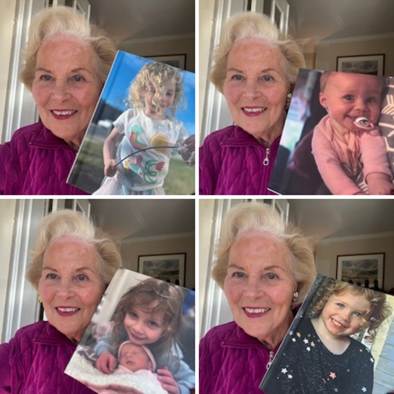
They make me smile every single time.
This is the perfect example of a gift aligned with what matters most in this chapter.
A new mindset: living by choice, not default
As women 50+, we stand at a powerful crossroads.
We’ve lived enough life to know what matters… and what no longer does.
Letting go—of stuff, of roles, of traditions, of expectations—is not rejecting the past.
It’s affirming the future you’re intentionally creating.
You get to choose:
- What stays
- What goes
- What continues
- What evolves
- What deserves space and time in this new chapter
Your next chapter deserves to be shaped with intention.
A closing reflection
Let this guide your choices:
Your home and your life should reflect who you are becoming— not who you were out of habit, guilt, or expectation.
And ask yourself gently:
What are you still holding onto—physically, emotionally, or socially— that no longer reflects the life you want next?
SHARE YOUR STORY!
Sign up for Rita’s FREE Newsletter HERE!
Never miss an episode! Click the following link to like Rita’s Facebook page or subscribe to her Decluttering YouTube Channel. Check out our YouTube playlists if you want to learn more.